
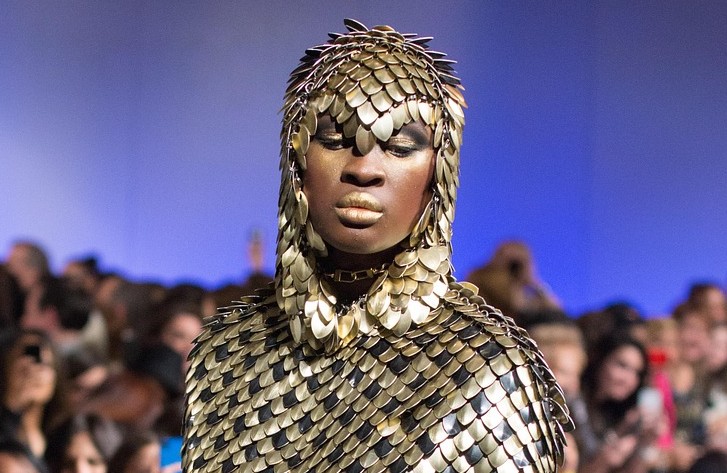
So, the ‘America’s Next Top Model’ (ANTM) controversy has been interesting.
If you’re unaware, Netflix recently released a documentary about the early 2000s reality TV show ‘America’s Next Top Model’. The premise of the show, created and hosted by supermodel Tyra Banks, was to select a group of young girls who would then compete through a series of challenges, to win the title of… America’s Next Top Model. The winner would gain a modelling contract.
The show ran from 2003 – 2018 and although it wasn’t something I watched regularly, I would dip in occasionally in its early days. I vaguely remember rooting for two contestants: Yaya, and Toccara. Toccara was described as ‘plus sized’ by the show (regular sized in the real world) but not only did I not finish that season, I vowed never to watch that show ever again after seeing how awfully they treated her.
I kept that vow.
Anyway, apparently people started watching reruns of the show during the pandemic. The children, teenagers and young adults who watched the show religiously when it first aired were now watching as adults, along with younger people, some of whom probably weren’t even born in the early 2000s, who were watching the show for the first time. Both groups were outraged.
Attitudes and behaviours have moved on quite a lot since 2003, and the nonsense that was considered ‘entertainment’ back in the early 2000s is now seen as cruel, abusive, dangerous and damaging. I say now, but some of us were aware back then.
Race swapping photoshoots, bullying, and the recording of two drunk people having sex which was then aired, are just a few of the things that went down on that show. The Netflix documentary was partly aimed at confronting these issues with the former cast, and contestants. I guess it was supposed to be a reckoning, with everyone admitting the role they played, however small, in that hot mess of a show.
Instead, what we got was the acknowledgment that things ‘may’ have been wrong but no real apologies or accountability. It was heavy on: ‘we were just following orders’, or as I call it, ‘the Himmler et al defence’.
No one was less accountable however than creator, executive producer, and host Tyra Banks. As someone who is into true crime, I’ve seen serial killers exhibit more empathy towards their victims than Tyra was able to muster for hers. She, like everyone else relied heavily on the ‘that’s just how it was back then’ excuse; developed momentary amnesia when asked about Shandi, the woman whose drunken sexploits were recorded and aired, and who Tyra interviewed multiple times in the years following on her crappy little chat show; and in a round about way blamed the viewers (many of whom were children at the time) for a lot of what happened claiming that it was their need for drama that created these situations.
Needless to say, many people are unimpressed with Tyra and her ‘meh’ attitude, lack of accountability, and the trenchcoat she wore during the interview (!) There have been many discussions about what it means to be accountable, whether it’s fair to judge a TV show of the past by today’s standards, and whether or not the contestants should bear some responsibility given that they chose to participate in a reality TV show.
Personally I don’t think Tyra Banks and the other key members of the show, are sorry about what happened and how they contributed to it. Fear of litigation, a bully mentality, psychopathy…Whatever the reason(s), they don’t care. It was a long time ago, they’ve made their money, built their reputations, and are, for the most part (very sad about Miss J) doing well.
Were they genuinely sorry, I believe they wouldn’t have needed a Netflix documentary to force them to confront these things so many years after the fact. I’ve seen Mr Jay online many times over the years talking about his relationship and ultimate fallout with Tyra. If he could reflect on that, he could have reflected on the other things too. There’s also the fact that 2003 wasn’t that long ago for Christs sake. Are we really supposed to believe that 23 years ago none of these people knew that making fun of a black woman’s natural hair, or recording and then airing the footage of two drunk people having sex were terrible things to do?
These people are strategic. They realise that as attitudes have shifted and being ‘cancelled’ has become a thing, they need to perform remorse in order to preserve what’s left of their reputations and careers.
But they are not sorry.
And this was, I think an important takeaway from this whole saga that we all can, and should learn from.
Sometimes the people that hurt you are not sorry about it.
Sometimes in life, people will wrong you and you will never receive an apology. It won’t matter how bad the thing they did was, or how affected you were by it, some people will never apologise, and if they do, it won’t be a real apology but one of those “I’m sorry you feel that…”
And we must find a way to make peace with this.
A while ago, I read something where a person was angry with a parent about things said parent had done to them when they were younger. The person’s therapist asked them what they would do if the parent passed away and never apologised or had a change of heart about what they did.
It’s a good question.
Yes, we may be owed an apology but that doesn’t mean we’re going to get one, so then what? Do we stay bitter about the situation forever? Do we wait for that person or those people to have a change of heart?
One of the many unfair things about life is this: If two people are driving and person A crashes into person B, person A is liable and will be required to pay for the damage. If someone undergoes a simple medical procedure, it goes wrong, and it comes to light that the surgeon was high on crack during the procedure, the hospital would (you’d hope) be required to pay compensation to the patient. But if someone causes you emotional, psychological, and sometimes even physical damage, there is no compensation. No one is required to pay for those damages. We are required to fix what the other person or people broke, and at our own expense.
And we must make peace with this.

Fighting against it does nothing but keep us stuck and bitter. We need to heal ourselves regardless of whether the people that hurt us are remorseful or not. Our healing is about us, not them.
That documentary was upsetting to watch, especially if you’re a black woman and even more so for dark-skinned black woman who bear the brunt of both the racism present in the fashion industry and, in my opinion, Tyra’s deeply entrenched anti-blackness rooted in her own low self-esteem.
That said, we can be as angry with Tyra and the other ANTM guys as much as we want but it’s not going to change anything. They’re not sorry. The women interviewed in the documentary appear to be doing well for themselves regardless, and I hope they’ve managed to heal from the ordeal.
Perhaps as viewers and observers, the rest of us can transfer our energy from being angry with the ANTM key players and instead use that energy to be more careful about the media we consume today since we’re adults now.






Leave a comment